Revolut People for Employees
Value for employees: clarity, fairness and growth
A clear success bar
Expectations are defined across deliverables, skills and values, giving an objective view of standing and growth instead of a spider chart or nine-box grid.
Fairness over favouritism
Your grade starts from your goals, skills and values scorecard, and calibration reviews it against the same bar for everyone at your level.
Direct connection to impact
Cascading goals, integrated with tools like Jira or Linear, show how daily tasks move company objectives.
Growth plans, praise and feedback
Managers can set up a growth plan for a promotion, skills development or a change of role, with a timeline and to-dos, and it is pulled into the 1:1 agenda. More short films
“After all, a motivated employee is a performance employee.”
“We want people to be rewarded equivalent to the impact they have on the organisation.”
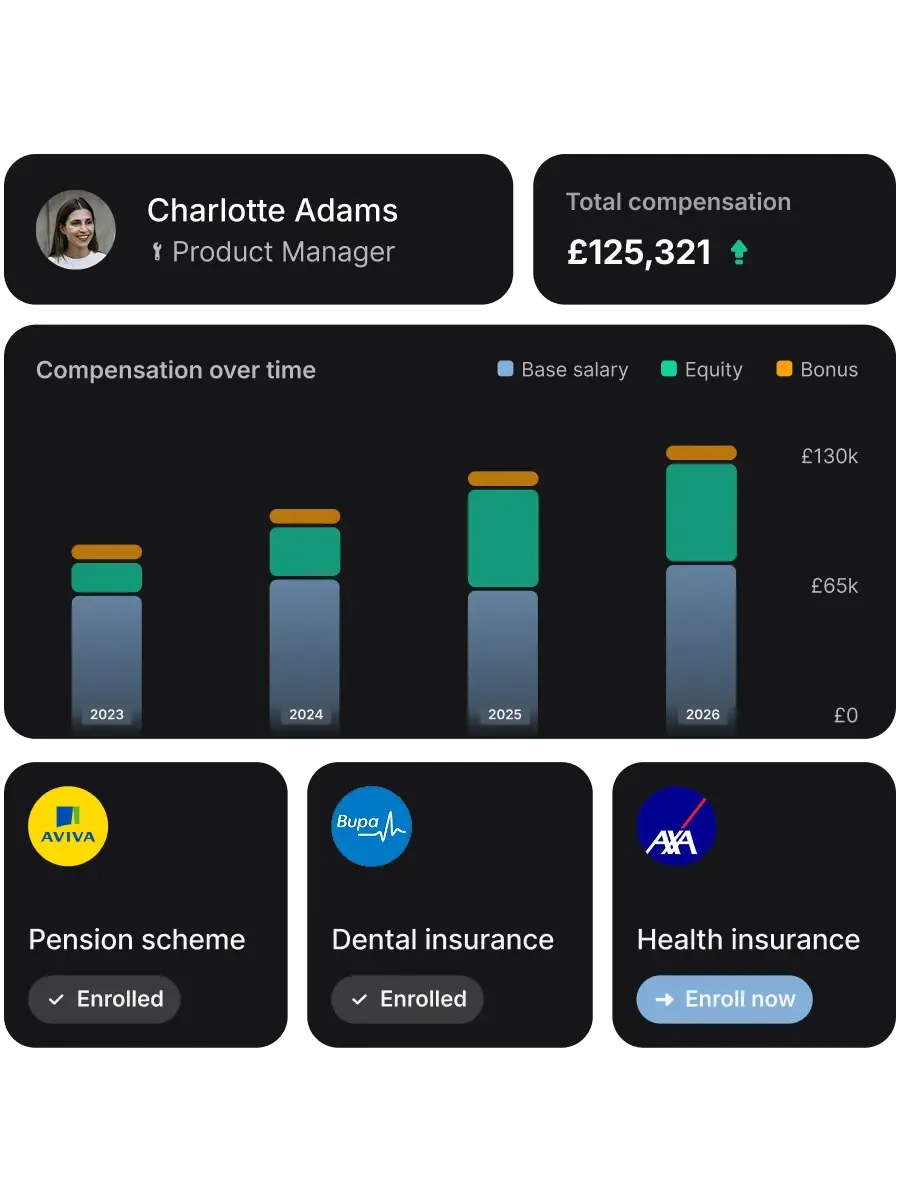
“At any point, I should be able to go into the system and check how I'm paid, how I compare to the benchmark and what I could earn if I perform above expectations”
“if they can check it straight into the system in real time, that's the gold standard.”
Skill gaps link to actionable growth plans; anytime feedback and praise badges recognise great work in the flow of work.
Questions employees usually ask
How will I be assessed? Against a written bar for your level, across deliverables, skills and culture, with evidence for each area. You should be able to read that bar before the cycle starts; ask your manager for it if you have not seen it.
What should I put in my self-assessment? Keep it short and specific: your main deliverables against your goals, one or two examples for each skill area and anything your manager may not have seen. Facts are more useful than adjectives.
How do I know the process is fair? Ratings are reviewed in calibration, where managers have to show evidence and outliers are challenged. If you disagree with an outcome, ask which evidence it was based on and what would change it next cycle.
Where an employee can start this cycle
- Write down your goals for the period and check with your manager that they link to your team’s goals.
- Keep a short running list of what you delivered and the feedback you received.
- After your review, agree one or two growth areas and when you will next discuss progress.
Customer proof
Huspy moved to a structured, data-backed review process, with performance data in one place.
Related: performance management framework · performance review bias guide · LiveFlow’s switch to Revolut People
Other roles: CEOs · CHROs · COOs · Chiefs of Staff · Line Managers · Employees
Prefer to talk? On the 15-minute review you walk Ash through your current review cycle. You leave with 3 specific fixes for it, whether or not you buy anything, plus an optional price for your headcount if you want one.
Customer results from Revolut People’s published customer stories (each story page links its source); capabilities as described by Revolut People. Rewritten in our own words.